
Magneti per motori elettrici destinati ai sistemi di trazione dei veicoli elettrici
Osenc Magnets produce magneti al neodimio ad alte prestazioni per motori di veicoli elettrici, sistemi di propulsione ibridi, servosterzi elettrici e applicazioni automobilistiche avanzate.
I nostri magneti NdFeB sinterizzati su misura sono progettati per garantire un’elevata densità di coppia, un design compatto dei motori, stabilità termica e prestazioni magnetiche a lungo termine in ambienti operativi esigenti per veicoli elettrici.
Magneti al neodimio per motori di veicoli elettrici
I motori dei veicoli elettrici richiedono magneti permanenti ad alte prestazioni in grado di generare campi magnetici intensi, strutture compatte e prestazioni stabili a temperature di esercizio elevate.
I magneti al neodimio-ferro-boro (NdFeB) sono ampiamente utilizzati nei motori sincroni a magneti permanenti (PMSM) e nei motori a corrente continua senza spazzole grazie alla loro elevata densità di energia magnetica e alle eccellenti caratteristiche di efficienza.

Vantaggi dei magneti NdFeB nei motori dei veicoli elettrici
Elevata densità di energia magnetica
I magneti NdFeB garantiscono un'elevata rimanenza e una forte densità di flusso magnetico, consentendo la realizzazione di motori compatti con elevata potenza in uscita.
Maggiore densità di coppia
I magneti ad alte prestazioni consentono di aumentare la coppia erogata, riducendo al contempo le dimensioni e il peso complessivi del motore.
Elevata efficienza del motore
I sistemi con motori a magneti permanenti migliorano l'efficienza di conversione energetica e riducono le perdite di potenza.
Progettazione di motori compatti
Le elevate prestazioni magnetiche consentono agli ingegneri di progettare sistemi di trazione per veicoli elettrici più piccoli e leggeri.
Maggiore semplicità meccanica
I motori a magneti permanenti riducono la necessità di sistemi di eccitazione aggiuntivi rispetto ai modelli tradizionali.

Tipi comuni di magneti per motori di veicoli elettrici
Magneti ad arco
I magneti ad arco e a segmento sono comunemente utilizzati nei gruppi rotore dei motori a magneti permanenti.
Caratteristiche
- Geometria curva
- Magnetizzazione radiale
- Elevata densità di flusso
- Integrazione del rotore di precisione

Magneti a segmenti
I magneti a segmenti vengono utilizzati nei motori di trazione ad alta efficienza che richiedono una distribuzione ottimizzata del campo magnetico.
Caratteristiche
- Configurazioni multipolari
- Geometria a tolleranza stretta
- Prestazioni ottimizzate del rotore

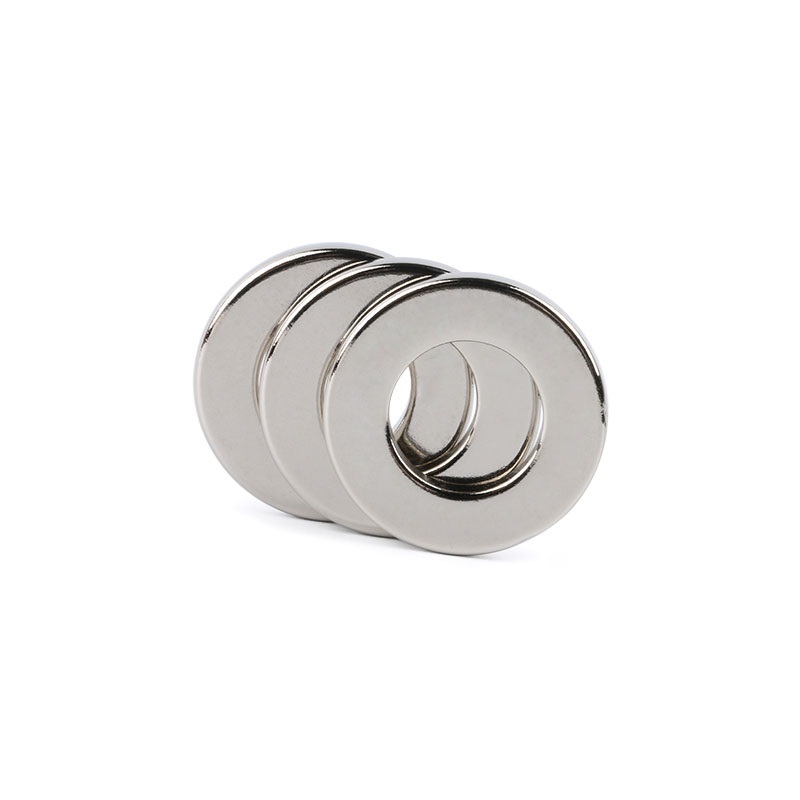
Magneti ad anello
I magneti ad anello possono essere utilizzati in sistemi motoristici compatti e in componenti ausiliari dei veicoli elettrici.
Caratteristiche
- Magnetizzazione multipolare
- Struttura compatta
- Controllo di precisione del campo magnetico
Applicazioni tipiche dei veicoli elettrici

Motori di trazione per veicoli elettrici
Magneti NdFeB ad alte prestazioni per motori elettrici di azionamento principali.

Sistemi di servosterzo elettrico
Magneti compatti per sistemi di motori di sterzo di precisione.

Compressori elettrici
Magneti permanenti utilizzati nei motori dei compressori elettrici dei climatizzatori.

Sistemi di motori ausiliari
Magneti per pompe, sistemi di raffreddamento e applicazioni con trasmissione secondaria.

Motori per veicoli ibridi
Magneti resistenti alle alte temperature per sistemi di veicoli elettrici ibridi.
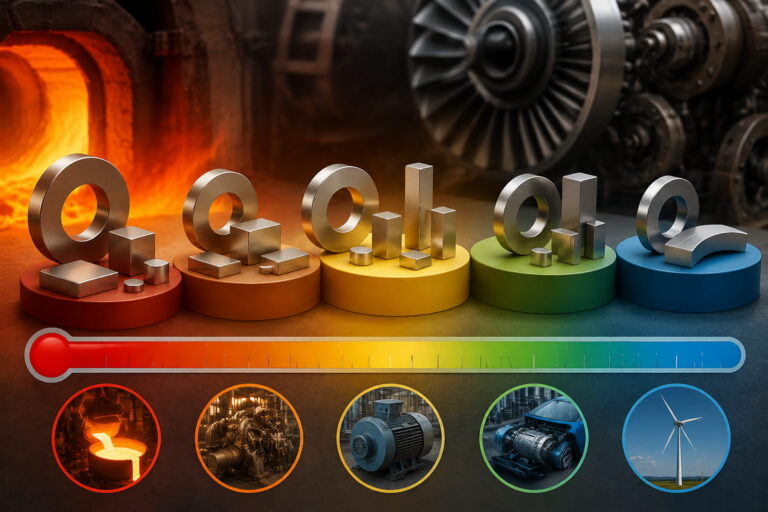
Tipi di magneti resistenti alle alte temperature per motori di veicoli elettrici
I motori dei veicoli elettrici funzionano spesso a temperature elevate e in condizioni di carico dinamico.
Osenc Magnets fornisce tipi di magneti NdFeB per alte temperature, progettati per garantire stabilità termica e resistenza alla smagnetizzazione.
Confronto tra classi di temperatura
| Tipo di voto | Temperatura massima di esercizio |
|---|---|
| H | 120 °C |
| SH | 150 °C |
| UH | 180 °C |
| EH | 200 °C |
Fattori chiave di prestazione
- Elevata coercitività
- Stabilità termica
- Resistenza alla smagnetizzazione
- Affidabilità a lungo termine

Requisiti operativi tipici dei veicoli elettrici
- Rotazione ad alta velocità
- Cicli termici
- Condizioni di carico continuo
- Vincoli di spazio ridotti

Metodi di magnetizzazione dei motori elettrici
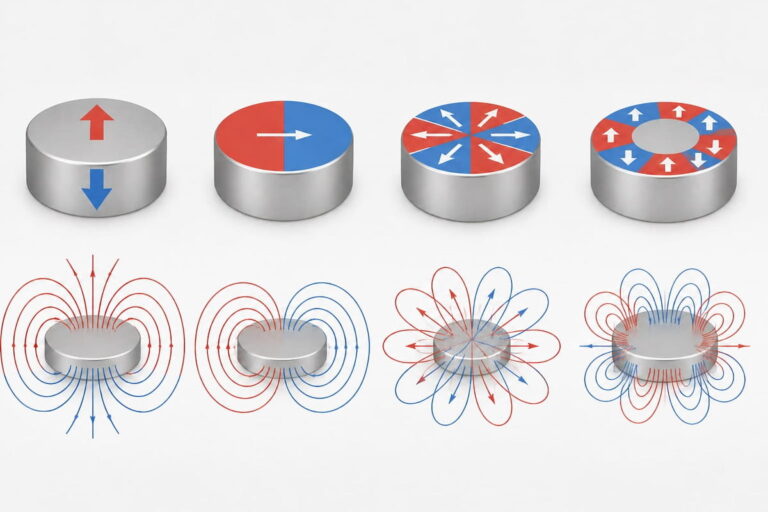
Magnetizzazione radiale
La magnetizzazione radiale è comunemente utilizzata nei gruppi rotore per generare campi magnetici rotanti.
Magnetizzazione multipolare
Intorno al rotore sono distribuiti diversi poli magnetici per ottimizzare l'efficienza del motore e la coppia erogata.
Controllo di precisione della magnetizzazione
Osenc Magnets offre soluzioni personalizzate per gli strumenti di magnetizzazione e la magnetizzazione multipolare destinate ad applicazioni avanzate nei motori dei veicoli elettrici.

Campo magnetico ed efficienza del motore
La forza magnetica generata dai magneti NdFeB contribuisce direttamente alla coppia e all'efficienza del motore.
Relazione semplificata tra le forze magnetiche

Aspetti ingegneristici
- Densità di flusso
- Geometria del rotore
- Air Gap
- Configurazione dei pali
- Gestione termica

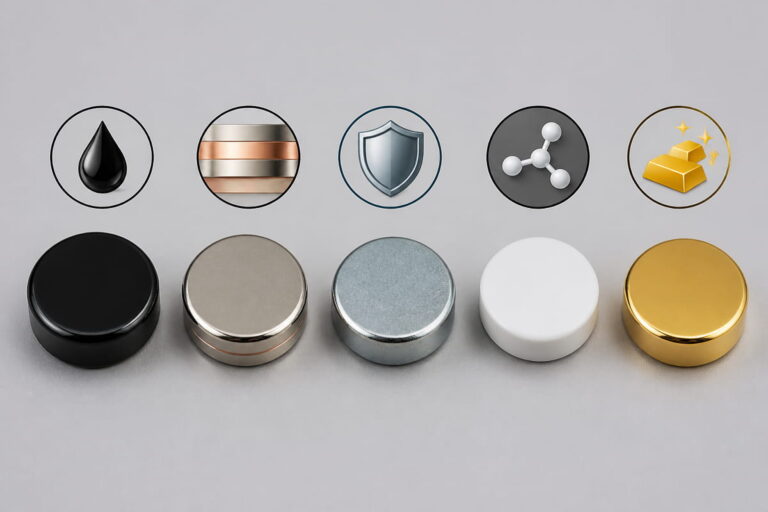
Rivestimenti superficiali per ambienti automobilistici
I magneti dei motori elettrici dei veicoli elettrici possono essere esposti a umidità, sbalzi di temperatura, vibrazioni e ambienti corrosivi.
Rivestimenti comuni
| Rivestimento | Resistenza alla corrosione | Uso tipico |
|---|---|---|
| NiCuNi | Medio | Sistemi motoristici standard |
| Epossidico | Alto | Ambienti umidi |
| PTFE | Alto | Applicazioni specializzate |
Vantaggi del rivestimento
- Protezione dalla corrosione
- Resistenza ambientale
- Maggiore stabilità superficiale
- Affidabilità a lungo termine

Produzione di precisione per magneti destinati ai veicoli elettrici
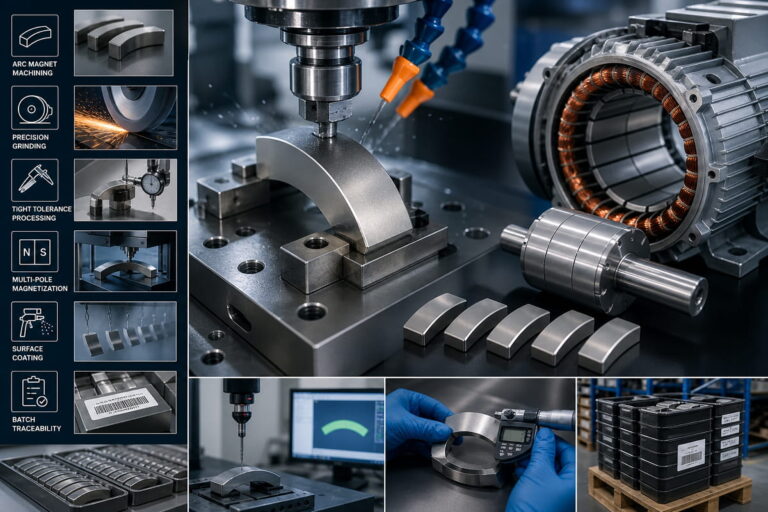
Osenc Magnets offre servizi di lavorazione di precisione e ispezione per la produzione di magneti per motori di veicoli elettrici.
Capacità produttive
- Lavorazione meccanica con magneti ad arco
- Rettifica di precisione
- Lavorazione con tolleranze strette
- Magnetizzazione multipolare
- Rivestimento superficiale
- Tracciabilità dei lotti
Capacità di tolleranza
Tolleranze di precisione fino a ±0,03 mm a seconda della geometria e dei requisiti applicativi.
Controllo qualità
- Prove di flusso magnetico
- Controllo dimensionale
- Controllo dello spessore del rivestimento
- Prova di trazione
- Verifica della stabilità termica

Materiali e proprietà magnetiche
Proprietà magnetiche tipiche
| Proprietà | Intervallo tipico |
|---|---|
| Remanenza (Br) | 1,17–1,45 T |
| Coercitività (Hcj) | 955–2388 kA/m |
| Prodotto energetico massimo (BHmax) | 33–53 MGOe |
Classi comuni di magneti per veicoli elettrici
- N42SH
- N48SH
- N50UH
- N52UH
Perché i produttori di veicoli elettrici utilizzano magneti NdFeB
Elevata densità di potenza
Motori compatti con elevate prestazioni di potenza.
Efficienza energetica
Perdite energetiche ridotte rispetto ai sistemi convenzionali.
Design leggero
Gruppi motore più piccoli e leggeri per migliorare l'efficienza dei veicoli.
Affidabilità a lungo termine
Prestazioni magnetiche stabili in condizioni di funzionamento continuo.
Produzione di magneti per veicoli elettrici (EV) OEM e su misura
Osenc Magnets offre servizi di produzione di magneti su misura e per conto terzi destinati ai sistemi dei veicoli elettrici.
Opzioni di personalizzazione
Forme personalizzate
- Magneti ad arco
- Magneti a segmenti
- Magneti ad anello
- Geometrie personalizzate dei rotori

Magnetizzazione personalizzata
- Radiale
- Multipolare
- assiale

Rivestimenti personalizzati
- Epossidico
- PTFE
- NiCuNi

Assistenza tecnica
- Ottimizzazione dei magneti del rotore
- Analisi delle prestazioni termiche
- Sviluppo di prototipi
- Supporto alla produzione OEM

Risorse tecniche correlate

Guida alle classi di magneti
Confronta i tipi di NdFeB per alte temperature destinati alle applicazioni nei veicoli elettrici.
Guida alla direzione di magnetizzazione
Scopri i metodi di magnetizzazione radiale e multipolare.
Guida alla forza di trazione
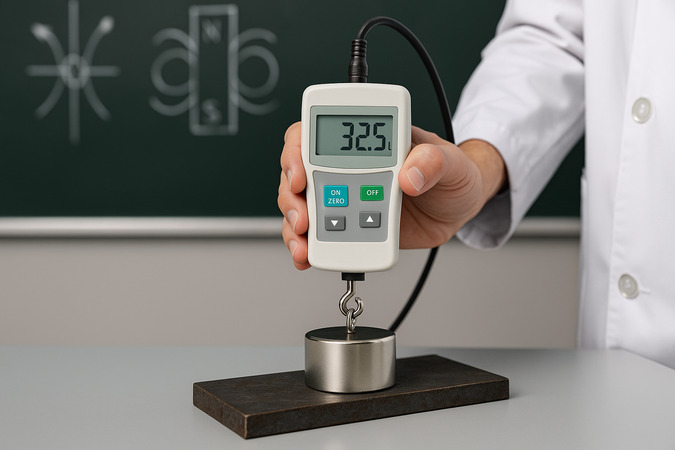
Comprendere la forza magnetica e gli aspetti relativi al circuito magnetico.
Guida al rivestimento magnetico
Confronta le prestazioni dei rivestimenti in contesti automobilistici.
Guida alla resistenza termica
Scegliere i gradi adeguati per i sistemi motorizzati ad alta temperatura.
Domande frequenti
I magneti permanenti NdFeB trovano ampio impiego nei motori sincroni a magneti permanenti e nei motori a corrente continua senza spazzole.
Garantiscono un’elevata forza magnetica, dimensioni compatte, una maggiore efficienza del motore e un’elevata densità di coppia.
La magnetizzazione radiale e quella multipolare sono comunemente utilizzate per i gruppi rotore.
I gradi H, SH, UH ed EH vengono comunemente scelti per temperature di esercizio elevate.
Sì. Osenc Magnets offre soluzioni personalizzate in termini di forme, rivestimenti, tolleranze e configurazioni di magnetizzazione.
I rivestimenti epossidici e quelli speciali resistenti alla corrosione sono comunemente utilizzati in ambienti particolarmente difficili.
Magneti NdFeB personalizzati per sistemi motorizzati di veicoli elettrici
Richiedete una consulenza tecnica, assistenza per la realizzazione di prototipi o preventivi per la produzione su misura relativi alle applicazioni dei magneti per motori di veicoli elettrici.