
Processo di magnetizzazione dei magneti al neodimio
Osenc Magnets offre soluzioni di magnetizzazione personalizzate per magneti sinterizzati in NdFeB, tra cui magnetizzazione assiale, diametrale, radiale e multipolare, destinate ad applicazioni industriali quali motori per veicoli elettrici, robotica, sensori, sistemi di automazione, dispositivi medici e assemblaggi magnetici.
Comprendere la direzione della magnetizzazione è fondamentale per la progettazione dei circuiti magnetici, la distribuzione del campo magnetico, la compatibilità dei componenti e le prestazioni complessive del sistema.
Che cos’è la direzione di magnetizzazione?
Orientamento dei poli magnetici nei magneti NdFeB
Per direzione di magnetizzazione si intende l'orientamento dei poli magnetici nord e sud all'interno di un magnete permanente.
La configurazione della magnetizzazione influisce direttamente su:
- Distribuzione del campo magnetico
- Forza di trazione
- Densità di flusso magnetico
- Prestazioni dell'Assemblea
- Comportamento rotazionale
- Precisione del sensore

Perché la direzione della magnetizzazione è importante
La scelta corretta della magnetizzazione è fondamentale per:
- Prestazioni del motore
- Giunti magnetici
- Sistemi di sensori
- Apparecchiature per l'automazione
- Gruppi di fissaggio magnetici

Direzioni comuni di magnetizzazione
Osenc Magnets supporta diverse configurazioni di magnetizzazione in base alle esigenze applicative e alla progettazione del circuito magnetico.
Principali tipi di magnetizzazione

Magnetizzazione assiale
Poli magnetici su superfici piane
La magnetizzazione assiale fa sì che i poli nord e sud si trovino su superfici piane opposte del magnete.
Struttura tipica
N↑ S↓
Forme comuni
- Magneti a disco
- Magneti ad anello
- Magneti a blocchi

Caratteristiche principali
- Forte forza di trazione diretta
- Orientamento semplice del campo magnetico
- Configurazione industriale standard
- Adatto per applicazioni di fissaggio

Applicazioni tipiche
- Supporti magnetici
- Sistemi di montaggio
- Chiusure
- Sensori
- Assemblaggi industriali generici

Vantaggi
- Processo di magnetizzazione semplice
- Campo superficiale intenso
- Produzione a costi contenuti
- Design ampiamente diffuso

Magnetizzazione diametrale
Poli magnetici su superfici curve
La magnetizzazione diametrale fa sì che i poli nord e sud si trovino su lati curvi opposti di magneti cilindrici o ad anello.
Struttura tipica
N←◯→S
Forme comuni
- Magneti cilindrici
- Magneti ad anello
- Magneti tubolari
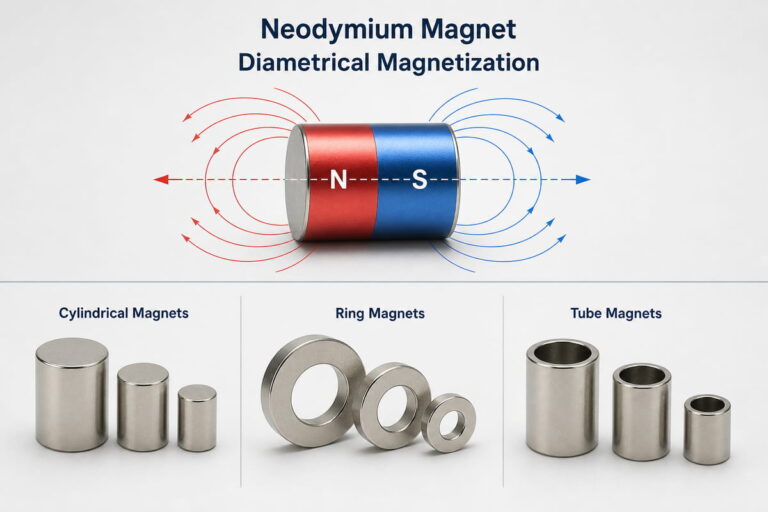
Caratteristiche principali
- Campo magnetico rotante
- Struttura a pali orientata lateralmente
- Adatto a sistemi rotanti

Applicazioni tipiche
- Sensori
- Giunti magnetici
- Encoder rotativi
- Sistemi di rilevamento della posizione

Vantaggi
- Ideale per applicazioni rotative
- Comportamento magnetico rotazionale stabile
- Progettazione di circuiti magnetici compatti

Magnetizzazione radiale
Poli magnetici orientati radialmente
La magnetizzazione radiale distribuisce i poli magnetici in modo radiale attorno alla geometria del magnete.
Struttura tipica
N⇒◯⇐S
Forme comuni
- Magneti ad arco
- Magneti a segmenti
- Magneti ad anello
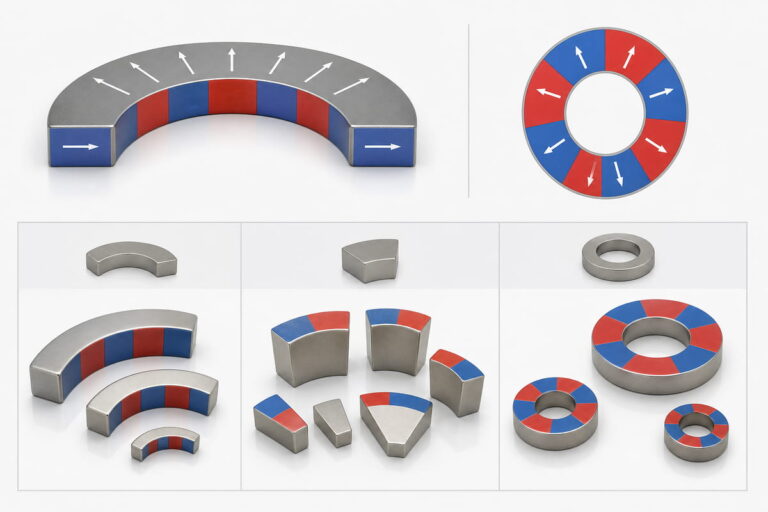
Caratteristiche principali
- Flusso magnetico radiale
- Ottimizzato per sistemi rotanti
- Circuiti magnetici ad alta efficienza

Applicazioni tipiche
- Motori CC senza spazzole
- Motori elettrici per veicoli elettrici
- Servomotori
- Generatori eolici

Vantaggi
- Elevata efficienza del motore
- Distribuzione del flusso magnetico ottimizzata
- Prestazioni di coppia ottimizzate

Aspetti ingegneristici
La magnetizzazione radiale richiede in genere attrezzature specializzate e un controllo preciso del campo magnetico.
Magnetizzazione multipolare
Configurazioni a più poli
La magnetizzazione multipolare crea poli nord e sud alternati distribuiti su tutta la superficie del magnete.
Esempio di disposizione dei pali
N−S−N−S−N−S
Caratteristiche principali
- Poli magnetici multipli
- Prestazioni rotazionali di precisione
- Modelli di campo magnetico controllati

Applicazioni tipiche
- Encoder
- Motori ad alta precisione
- Sistemi di sensori
- Apparecchiature per l'automazione

Vantaggi
- Rilevamento migliorato della posizione
- Controllo rotazionale di precisione
- Sistemi magnetici compatti

Direzione di magnetizzazione in base alla forma del magnete
| Forma del magnete | Direzione comune di magnetizzazione |
|---|---|
| Magnete a disco | assiale |
| Magnete ad anello | Assiale / Diametrale / Radiale |
| Magnete a blocco | assiale |
| Magnete ad arco | Radiale |
| Magnete tubolare | Diametralmente opposto |
| Magnete a segmento | Radiale / Multipolare |
Processo di magnetizzazione
Magnetizzazione a impulsi ad alta intensità
I magneti al neodimio vengono magnetizzati dopo la lavorazione e il rivestimento mediante apparecchiature di magnetizzazione a impulsi ad alta energia.
Flusso di lavoro di magnetizzazione
Lavorazione → Rivestimento → Posizionamento nel dispositivo di fissaggio → Magnetizzazione a impulsi → Controllo del flusso
Apparecchiature di magnetizzazione
- Magnetizzatori a impulsi
- Apparecchi multipolari
- Dispositivi per la magnetizzazione radiale
- Sistemi di utensili personalizzati

Obiettivi del processo
- Orientamento stabile del polo
- Campo magnetico uniforme
- Prestazioni magnetiche costanti
- Posizionamento accurato dei pali

Distribuzione del flusso magnetico e del campo magnetico
Effetto della direzione di magnetizzazione
La direzione di magnetizzazione influisce in modo significativo sul comportamento del campo magnetico e sulla distribuzione del flusso magnetico.
Densità di flusso magnetico
B=Φ/A
Dove:
- ( B ) = Densità di flusso magnetico
- ( Φ ) = Flusso magnetico
- ( A ) = Area
Fattori ingegneristici
- Orientamento del palo
- Air Gap
- Geometria del circuito magnetico
- Grado del materiale
- Forma del magnete

Forza di trazione e direzione di magnetizzazione
Relazione tra l'orientamento dei poli e la forza
Le diverse direzioni di magnetizzazione influenzano le prestazioni in termini di forza di trazione e il comportamento dell'interazione magnetica.
Magnetizzazione assiale
In genere genera una forte forza di trazione diretta sulle superfici di contatto piane.
Magnetizzazione diametrale
Fornisce un'interazione magnetica rotazionale anziché una forza di ritenuta diretta.
Magnetizzazione radiale
Ottimizzato per i campi magnetici rotanti nei sistemi motorizzati.
Soluzioni personalizzate per la magnetizzazione
Magnetizzazione specifica per l'applicazione
Osenc Magnets offre soluzioni di magnetizzazione personalizzate basate su:
- Disegni CAD
- Progettazione dei motori
- Requisiti dei sensori
- Progettazione di circuiti magnetici
- Requisiti di configurazione dei pali

Opzioni di magnetizzazione personalizzate
- assiale
- Diametralmente opposto
- Radiale
- Multipolare
- Progetti di pali inclinati
- Conteggi personalizzati dei pali

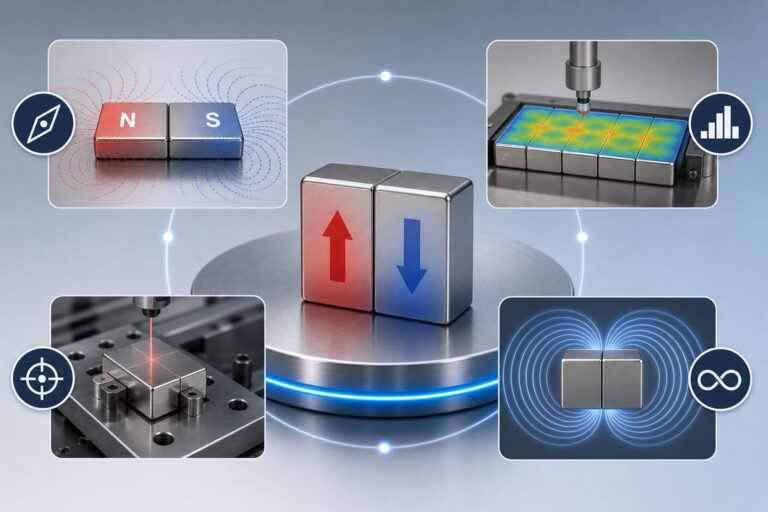
Controllo qualità e collaudo del flussante
Verifica dei poli magnetici
Osenc Magnets esegue procedure di ispezione per verificare l'orientamento magnetico e l'uniformità del campo magnetico.
Capacità di ispezione
Prova di densità di flusso
Misurazione dell'intensità del campo magnetico.
Ispezione dell'orientamento dei pali
Verifica del posizionamento dei poli magnetici.
Mappatura del campo magnetico
Analisi della distribuzione del campo magnetico.
Verifica del misuratore di campo magnetico
Misurazione della densità di flusso magnetico superficiale.

Obiettivi di qualità
- Orientamento stabile del polo
- Prestazioni magnetiche uniformi
- Posizionamento accurato dei pali
- Flusso magnetico costante
Domande frequenti
Per direzione di magnetizzazione si intende l'orientamento dei poli magnetici nord e sud all'interno di un magnete permanente.
La magnetizzazione assiale fa sì che i poli magnetici si trovino sulle superfici piane opposte del magnete.
La magnetizzazione diametrale posiziona i poli magnetici sui lati curvi opposti dei magneti cilindrici.
La magnetizzazione radiale è comunemente utilizzata nei motori brushless, nei motori per veicoli elettrici e nei sistemi magnetici rotanti.
La magnetizzazione multipolare crea una serie di poli nord e sud alternati sulla superficie del magnete.
Sì. Osenc Magnets offre configurazioni personalizzate dei poli e soluzioni di magnetizzazione specifiche per ogni applicazione.
Soluzioni personalizzate di magnetizzazione per magneti NdFeB
Richiedi una consulenza tecnica, assistenza per i circuiti magnetici o supporto per la produzione di magneti su misura per il tuo progetto.