Sintesi rapida
Yes, neodymium magnets are permanent and lose only about 1% of their strength every 100 years under ideal conditions. However, excessive heat, corrosion, and strong opposing magnetic fields can permanently destroy their magnetism.
Most magnets come with protective coatings to prevent rust, but temperature management is critical. Handle them with care, and they will outlast the equipment they are built into.
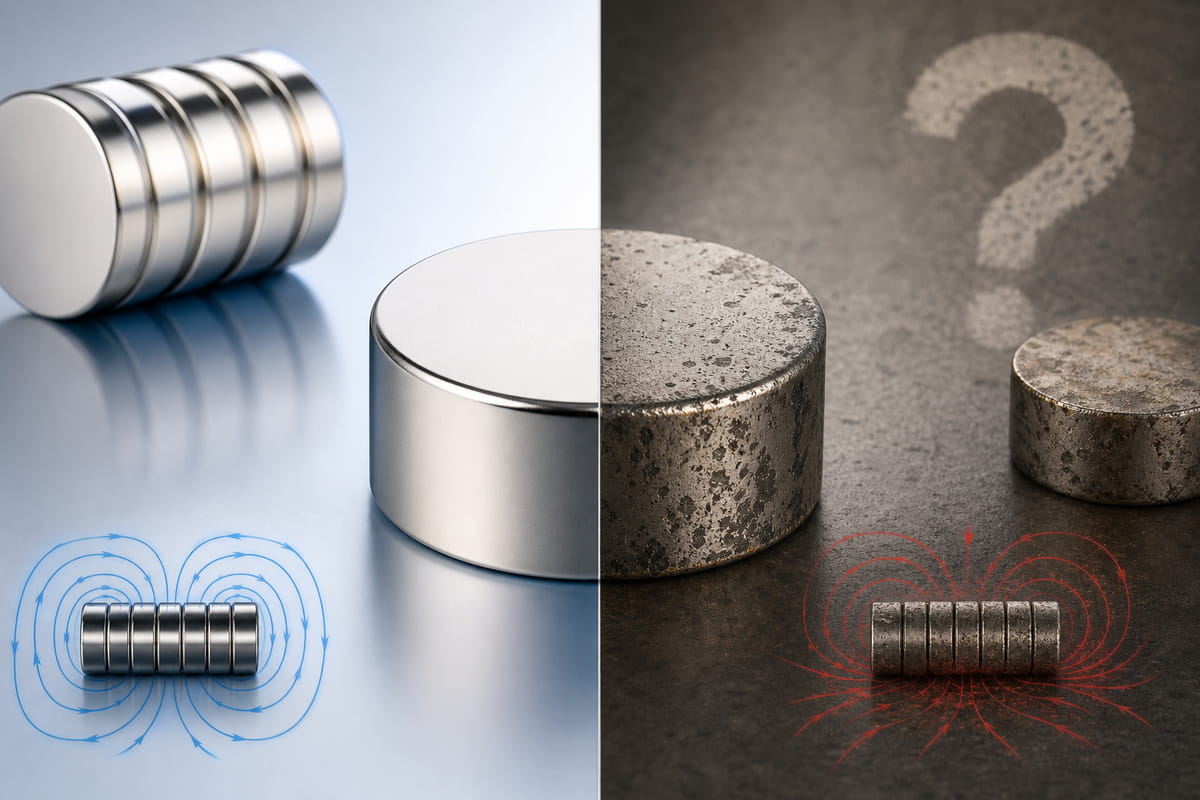
Are neodymium magnets permanent? The short answer is YES. Neodymium magnets are permanent magnets. They maintain their magnetic field without any external power source. No electricity required. No batteries. No complicated setup.
In questo articolo, in qualità di professionista produttore di magneti al neodimio, let me break down exactly what you need to know about this permanent magnet.
Are Neodymium Magnets Permanent?
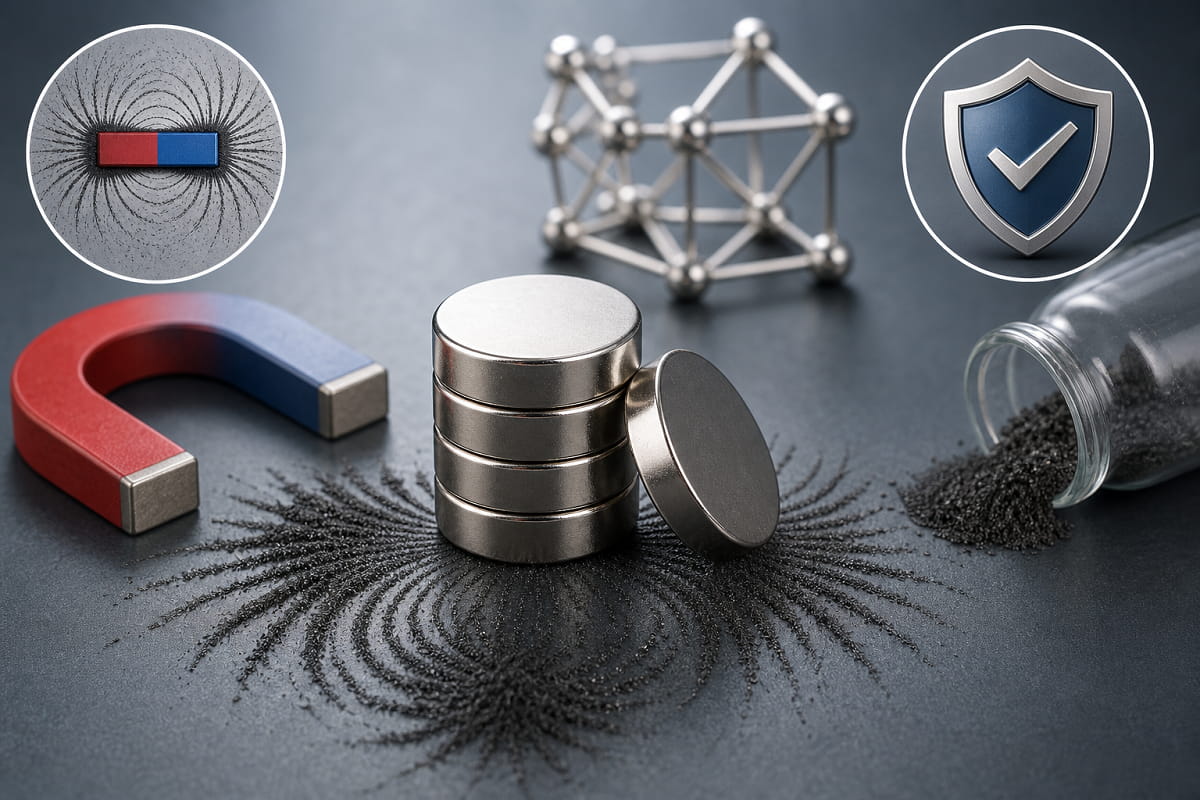
Yes, neodymium magnets are permanent magnets. They’re the most widely used type of rare-earth permanent magnet. Once magnetized, they maintain their magnetic properties indefinitely under normal conditions.
Under ideal conditions, these magnets lose about 1% of their magnetic strength every 100 years. That’s essentially a lifetime of use for almost any practical application.
Ma Permanent doesn’t mean indestructible.
There are three specific things that can permanently kill your neodymium magnet’s magnetic field. And I want you to pay close attention to these, because messing this up can cost you serious money.
The 3 Biggest Threats to Your Neodymium Magnets
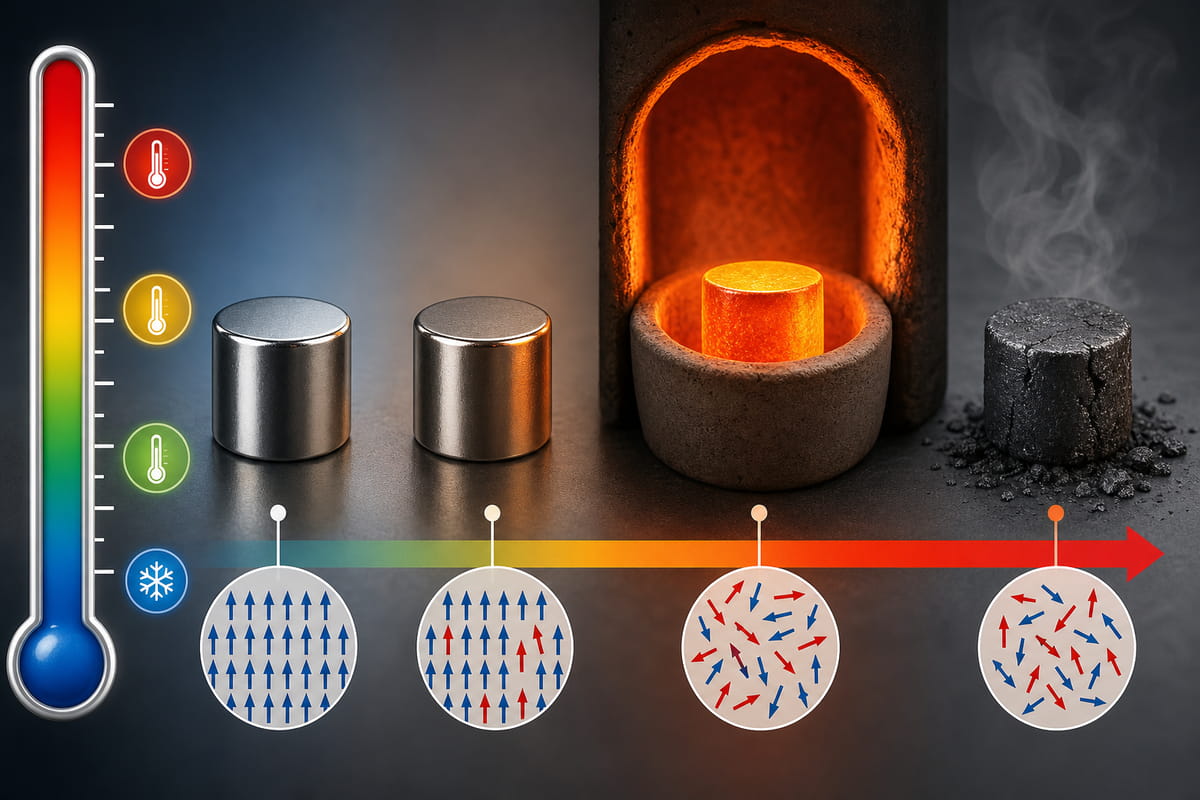
1. Excessive Heat (The Silent Killer)
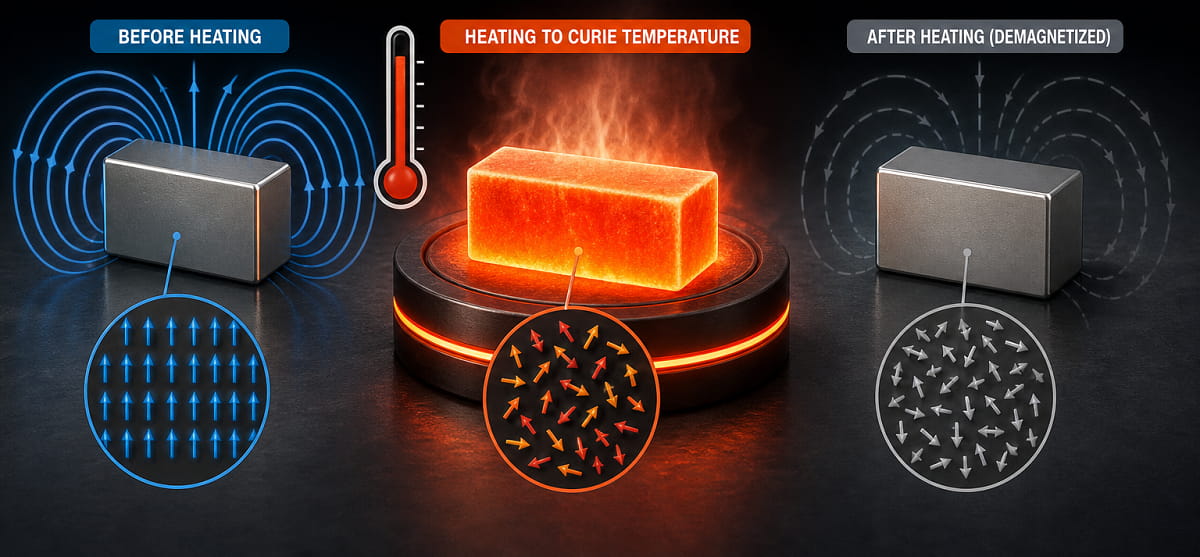
This is the #1 way people destroy their neodymium magnets.
Neodymium magnets have a temperature limit. Exceed it, and they permanently lose their magnetism. Permanently. As in, you can’t get it back. Ever.
The exact temperature depends on the magnet’s grade, but generally:
- Standard grades start losing magnetism above 80°C (176°F)
- High-temperature grades can handle up to 200°C (392°F)
Consiglio da esperto: If you’re working in a hot environment or your application generates significant heat, you need a high-temperature neodymium magnet. Companies like Walmag make specialized versions like their “Neo Hot” that can handle temperatures up to 180°C without losing magnetic power.
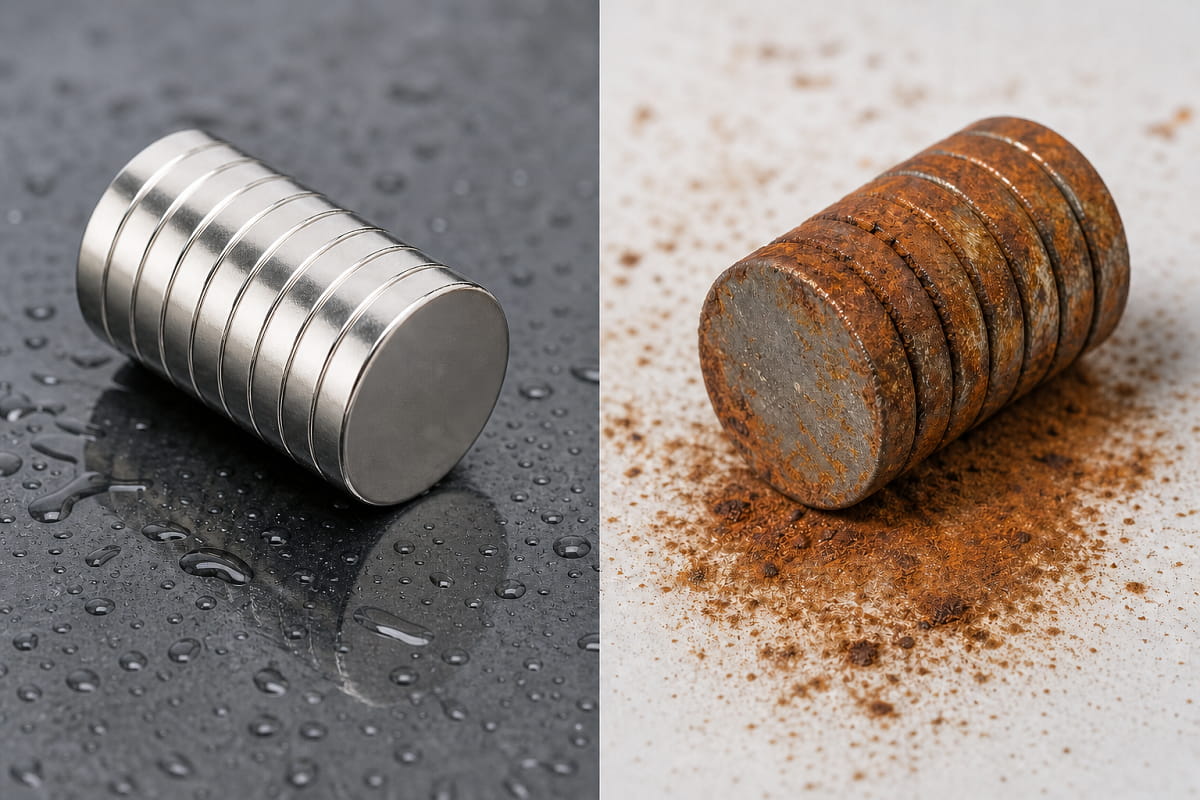
2. Corrosion (The Hidden Enemy)
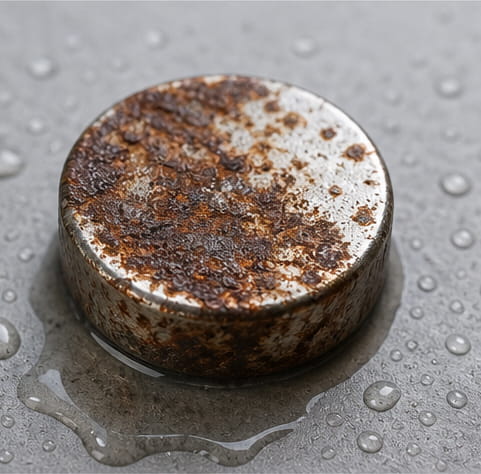
Uncoated neodymium magnets are prone to rust and degradation. This isn’t just a cosmetic issue—it actually destroys the material and weakens the magnetic force.
Think of it like this: Your magnet is slowly being eaten away. And as the material degrades, so does the magnetic field.
The good news? Most neodymium magnets come with protective coatings. The most common are:
- Nickel plating (the industry standard)
- Rivestimento in zinco
- Copper coating
- Epoxy resin coating
- Gold plating (for specialty applications)
Standard practice is a two-layer process: copper as the interior coating and nickel as the exterior. For high-abrasion environments, three-layer coatings (nickel-copper-nickel) are ideal.
Important: If your magnet gets chipped or cracked and the inner layer is exposed, dispose of it safely. The microcrystalline structure of neodymium magnets can produce small, often invisible shards that can embed in your skin or eyes. Not fun.
3. Demagnetizing Fields (The One You Don’t See Coming)
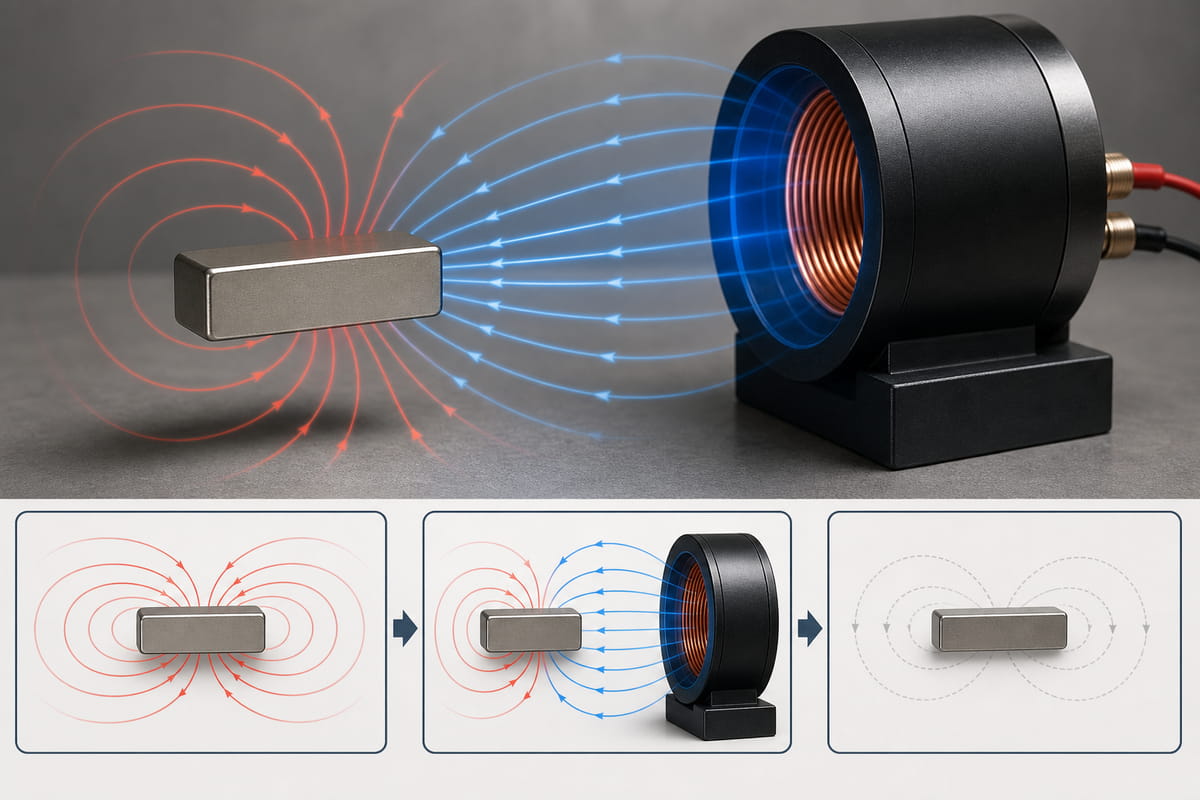
Expose a neodymium magnet to a strong, opposing magnetic field, and you can alter or demagnetize it.
This is actually pretty rare in most applications. But if you’re working with multiple magnets or in environments with strong electromagnetic fields, it’s something to watch out for.
How Strong Are Neodymium Magnets REALLY?
Let me put this in perspective.
The strength of a neodymium magnet is measured by its grade—the “N” number you see on spec sheets (N35, N42, N52, etc.). This number represents the maximum energy product in Mega Gauss Oersteds (MGOe).
Here’s what those grades mean in practice:
N35/N38: Entry-level. Good for less demanding applications like small motors and consumer gadgets. Great for basic holding or lifting.
N40/N42: The sweet spot. Perfect for industrial equipment, fishing magnets, magnetic separators, audio systems, and medical devices. Excellent balance between power and cost.
N50/N52: The heavy hitters. Used when you need maximum strength in a very small space. Think high-performance motors, aerospace equipment, wind turbines, and MRI machines.
A N52 magnet can produce a field of up to 16.3 kG (kilogauss). To give you some context, that’s about 10 times stronger than a ceramic magnet of the same size.
Quick comparison: The maximum energy product of a sintered neodymium magnet ranges from 200 to 400 kJ/m³. An Alnico or ceramic magnet? Just 10-88 kJ/m³. That’s not even close.
Where Are Neodymium Magnets Used? (Hint: Everywhere)
You’re probably using a neodymium magnet right now without even knowing it.
These things are everywhere:
Elettronica

- Smartphone
- Computer hard disk drives
- Speakers and earphones
- Cordless power tools
- Magnetic fasteners
Settore automobilistico
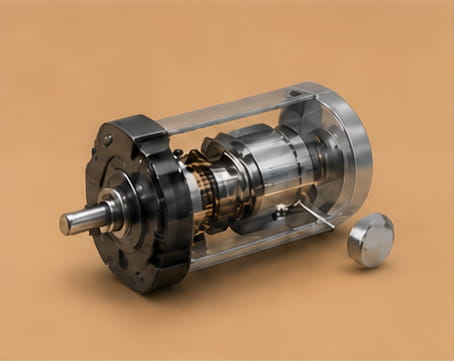
- Electric motors in hybrid and electric vehicles
- Actuators
- Sensori
Energia rinnovabile

- Wind turbines
- Solar panel motors
Medical
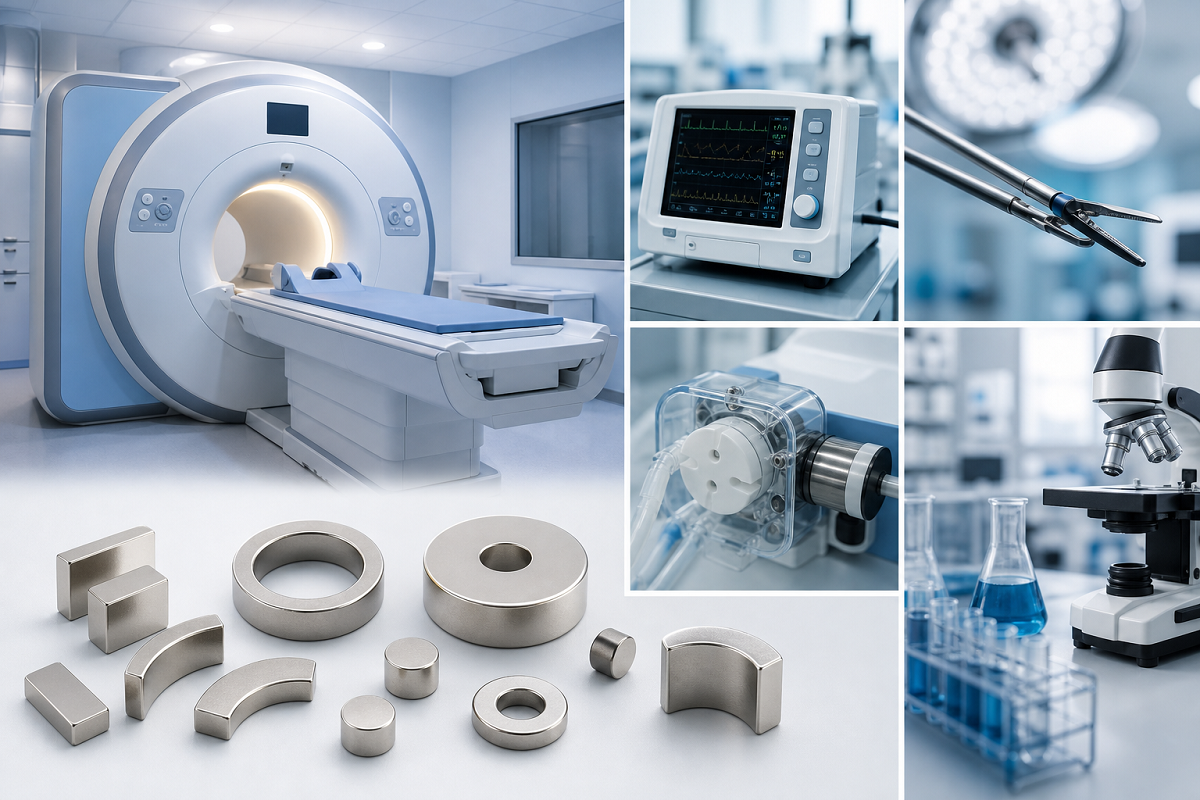
- MRI machines
- Prosthetics
- Medical instrumentation
Industrial
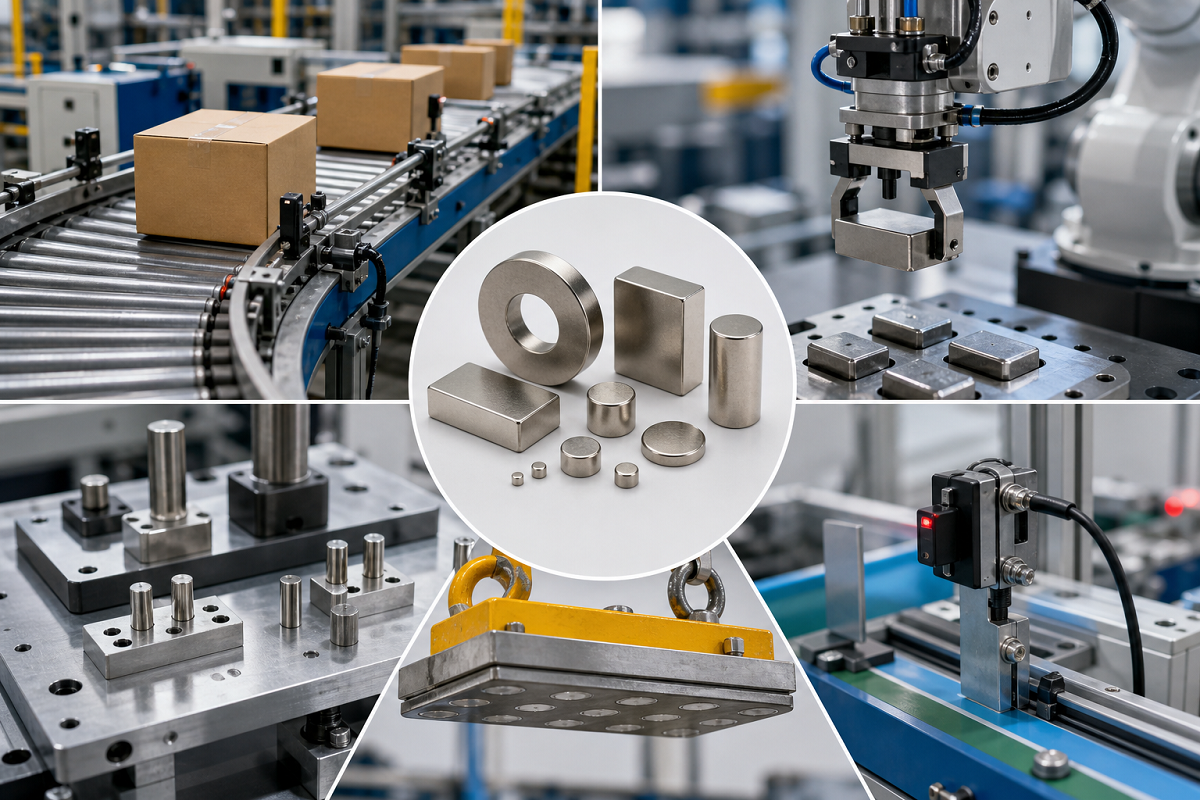
- Lifting magnets (my personal area of expertise)
- Magnetic clamps and workholding
- Separatori magnetici
- Material handling equipment
Here’s a concrete example: Walmag uses neodymium magnets to manufacture load-lifting magnets. Their smallest model, the NEOL 150, weighs only 3 kg and can officially lift loads up to 150 kg. That’s 50x its own weight.
In conclusione? These magnets are the backbone of modern technology. Without them, many of the advancements over the past few decades wouldn’t have been possible.
How to Protect Your Neodymium Magnets
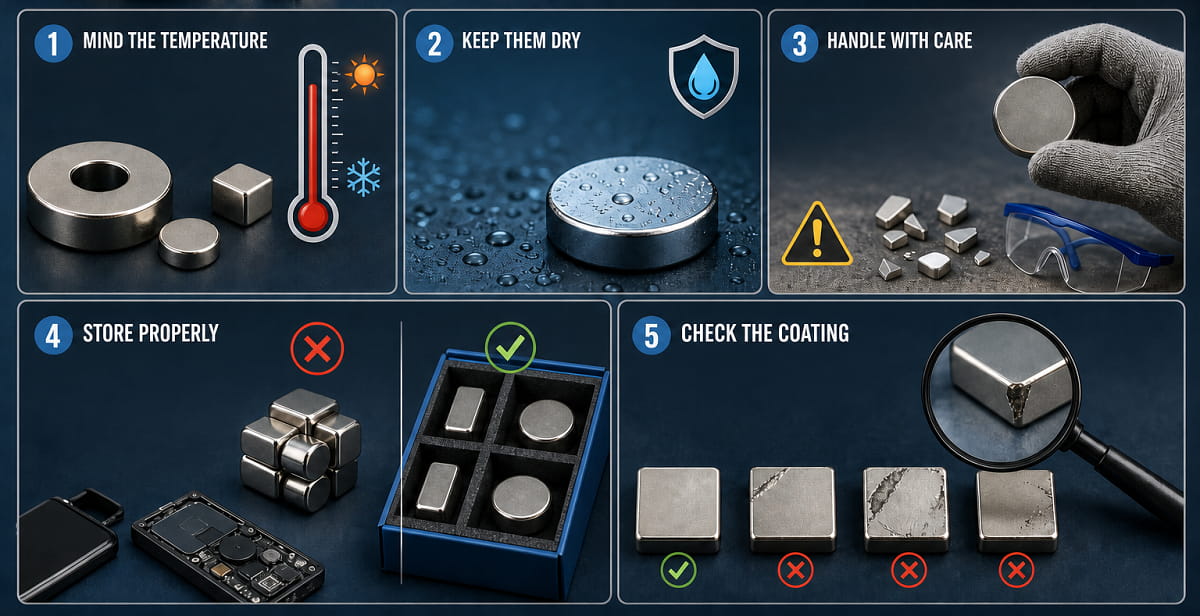
If you want your magnets to last, here’s what I recommend:
1. Mind the Temperature Know your operating temperature and choose the right grade. If there’s any doubt, go with a high-temperature grade.
2. Keep Them Dry Even with coating, minimize moisture exposure. If you’re using them in wet environments, get extra protection or consider specialized waterproof construction.
3. Maneggiare con cura These things are brittle. Drop them on concrete, and they might shatter. The resulting shards are sharp and dangerous. Use gloves and eye protection when handling large magnets.
4. Store Properly Keep them away from other magnets and electronics. And if you’re storing multiple magnets, use proper separators to prevent them from snapping together.
5. Check the Coating Regularly inspect your magnets for chips, cracks, or wear in the coating. If you spot damage, it’s time to replace the magnet.
In sintesi
Let’s circle back to the main question.
Yes, neodymium magnets are permanent magnets. They maintain their magnetic field for decades—centuries, even—without any external power.
The key word there is “maintain.”
Because while they ARE permanent, they’re not immune to damage. Heat, corrosion, and opposing magnetic fields can permanently reduce or destroy their magnetic properties.
But here’s the thing: With proper handling and protection, these magnets will outlast whatever equipment you put them in. Their longevity is greater than the longevity of the main magnet itself, whether it’s a lifting magnet or a magnetic clamp.
To summarize:
- Are neodymium magnets permanent? Absolutely. They’re the strongest, most reliable permanent magnets available.
- Will they stay magnetic forever? Under ideal conditions, they lose about 1% of their magnetic strength every 100 years. That’s permanent in any practical sense.
- Can you ruin them? Yes. Excessive heat, corrosion, and demagnetizing fields can permanently kill them.
- Is it worth the risk? In most applications, absolutely. The benefits far outweigh the drawbacks.